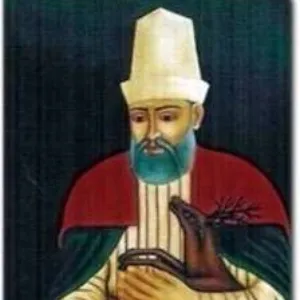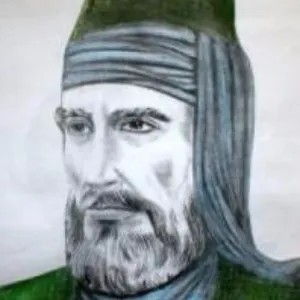
Founder of Ahi order (T.N. Turkish-Islamic guild), master of tanners. His real name is ŞeyhNasîrüddinMahmûdAhîEvran b. Abbas and he is known as AhîEvran or AhîEvren by people. “Evran” means “sky, universe”. It is assumed that he lived for 93 years between the 13th and 14th centuries. Although there is not detailed information on his life, there are various anecdotes about him. He is a famous Sufi who played a major role in developing and applying an efficient tradition and morality the field of craftsmen and commercial ethics and who was a poet.
AhîEvran who was raised in Anatolia lived in Denizli, Konya and Kayseri for certain periods and besides he went to numerous cities and towns and had great contribution to the establishment and spread of Ahi order. Finally he settled to Kırşehir and stayed here until his death. A zâviyesmall dervish lodge was built in his name.
In Velâyetnâmeof the famous Sufi and thinker HacıBektaş-ıVeli (XV.Century) it is written that AhîEvran met HacıBektaş-ıVeli and other Sufi masters and had a close friendship especially with HacıBektâş-ıVelî. Based on various sources and some historical events, it is assumed that he lived in the same age with another great personality, the famous Sufi and thinker MevlânâCelâleddîn-iRûmî. It is supposed that he passed away or was killed in 1262 or between 1300 and 17 but researches show that even these dates are not precise.
He is regarded as master of tanners and lineage of Turkish tanners are based on him. Starting from the 15th century, along the whole history of the Ottoman Empire, even nowadays, it is known in the whole Ottoman territory including Anatolia, Rumelia, Bosnia and Crimea that AhîEvran was the master of craftsmen and craftsmanship. AhîEvran Lodge in Kırşehir is deemed as the spiritual center of all craftsmen for centuries, primarily of tanners. According to the tradition appeared, Ahi Baba who received his title in AhiEvran Lodge and persons he authorized had the right to bind a ceinture to apprentices. This authority was confirmed by the state from time to time and sharing this authority caused the softening of relations of some craftsmen and AhîEvran lodge and fütüvvettradition. After this development it was observed that some lodge masters in some periods applied to state authorities and received a paper, which said that they were the masters of all craftsmen. A building was established onto the tomb in Ahî AhiEvranLodge, which was built in the 14th century by ŞeydiBeyoğluEmîrHasanBey in 1450. In 1481, DulkadiroğluAlâüddevleBey expanded the building. In 1560-61 a sheikh from the family of AhîEvran added a mosque to the lodge. In AhiEvran Lodge, there are a divanhane, a sofa, chambers, tombs and a tablet put on the main door aside from the mosque. In the tablet, the name of the famous Sufi and Sultan Mahmud II’s signature (dated 1819-1820) are present. The lodge obtained its final outlook after the restoration made by General Directorate for Foundations between 1968 and 72.
REFERENCE: Cevat Hakkı Tarım / Kırşehir Tarihi Üzerinde Araştırmalar I (1938), Tarihte Kırşehri-Gülşehri (1948), Abdülbâki Gölpınarlı / Vilâyetnâme (1958), W. Rüben / Kırşehir'in Dikkatimizi Çeken San'at Âbideleri A: Yapılar (çev. Abidin İtil, 1947), Mikâil Bayram / Ahi Evren Kimdir? (1978), Neşet Çağatay / Bir Türk Kurumu Olan Ahilik (1981), İlhan Şahin / Ahi Evran Vakfiyyesi ve Vakıflarına Dair (Türklük Araştırmaları Dergisi sy:I, s. 324-341, 1985), İlhan Şahin / TDV İslam Ansiklopedisi (c. 1, s. 529-530, 1988), İşık / Ünlü Fikir ve Kültür Adamları (Türkiye Ünlüleri Ansiklopedisi, C. 3, 2013) - Encyclopedia of Turkey’s Famous People (2013).
Photos
Founder of Ahi order (T.N. Turkish-Islamic guild), master of tanners. His real name is ŞeyhNasîrüddinMahmûdAhîEvran b. Abbas and he is known as AhîEvran or AhîEvren by people. “Evran” means “sky, universe”. It is assumed that he lived for 93 years between the 13th and 14th centuries. Although there is not detailed information on his life, there are various anecdotes about him. He is a famous Sufi who played a major role in developing and applying an efficient tradition and morality the field of craftsmen and commercial ethics and who was a poet.
AhîEvran who was raised in Anatolia lived in Denizli, Konya and Kayseri for certain periods and besides he went to numerous cities and towns and had great contribution to the establishment and spread of Ahi order. Finally he settled to Kırşehir and stayed here until his death. A zâviyesmall dervish lodge was built in his name.
In Velâyetnâmeof the famous Sufi and thinker HacıBektaş-ıVeli (XV.Century) it is written that AhîEvran met HacıBektaş-ıVeli and other Sufi masters and had a close friendship especially with HacıBektâş-ıVelî. Based on various sources and some historical events, it is assumed that he lived in the same age with another great personality, the famous Sufi and thinker MevlânâCelâleddîn-iRûmî. It is supposed that he passed away or was killed in 1262 or between 1300 and 17 but researches show that even these dates are not precise.
He is regarded as master of tanners and lineage of Turkish tanners are based on him. Starting from the 15th century, along the whole history of the Ottoman Empire, even nowadays, it is known in the whole Ottoman territory including Anatolia, Rumelia, Bosnia and Crimea that AhîEvran was the master of craftsmen and craftsmanship. AhîEvran Lodge in Kırşehir is deemed as the spiritual center of all craftsmen for centuries, primarily of tanners. According to the tradition appeared, Ahi Baba who received his title in AhiEvran Lodge and persons he authorized had the right to bind a ceinture to apprentices. This authority was confirmed by the state from time to time and sharing this authority caused the softening of relations of some craftsmen and AhîEvran lodge and fütüvvettradition. After this development it was observed that some lodge masters in some periods applied to state authorities and received a paper, which said that they were the masters of all craftsmen. A building was established onto the tomb in Ahî AhiEvranLodge, which was built in the 14th century by ŞeydiBeyoğluEmîrHasanBey in 1450. In 1481, DulkadiroğluAlâüddevleBey expanded the building. In 1560-61 a sheikh from the family of AhîEvran added a mosque to the lodge. In AhiEvran Lodge, there are a divanhane, a sofa, chambers, tombs and a tablet put on the main door aside from the mosque. In the tablet, the name of the famous Sufi and Sultan Mahmud II’s signature (dated 1819-1820) are present. The lodge obtained its final outlook after the restoration made by General Directorate for Foundations between 1968 and 72.
REFERENCE: Cevat Hakkı Tarım / Kırşehir Tarihi Üzerinde Araştırmalar I (1938), Tarihte Kırşehri-Gülşehri (1948), Abdülbâki Gölpınarlı / Vilâyetnâme (1958), W. Rüben / Kırşehir'in Dikkatimizi Çeken San'at Âbideleri A: Yapılar (çev. Abidin İtil, 1947), Mikâil Bayram / Ahi Evren Kimdir? (1978), Neşet Çağatay / Bir Türk Kurumu Olan Ahilik (1981), İlhan Şahin / Ahi Evran Vakfiyyesi ve Vakıflarına Dair (Türklük Araştırmaları Dergisi sy:I, s. 324-341, 1985), İlhan Şahin / TDV İslam Ansiklopedisi (c. 1, s. 529-530, 1988), İşık / Ünlü Fikir ve Kültür Adamları (Türkiye Ünlüleri Ansiklopedisi, C. 3, 2013) - Encyclopedia of Turkey’s Famous People (2013).